

The Mill City Runs on Small Businesses. This Is How You Find Them.
How to use this directory, what is actually in it, and what to check before you hire anyone in Lowell and the Merrimack Valley. Written for residents, newcomers and owners who would rather deal with someone down the road than a call centre three states away.
The short version
LowellBusiness.com is a hand-checked directory of businesses serving Lowell, Massachusetts and the surrounding Merrimack Valley. Search it by keyword, browse it by category, or browse it by the city or town a business serves. Every listing is reviewed by a person before it appears. Listings are paid, from $99 for twelve months.
The directory is strongest in business and document services — notaries, apostille and authentication, shredding, shipping, mail forwarding and translation. Other categories are thinner and openly being built out.
Last reviewed: September 2026
How to use this directory
There are three ways into the directory, and they suit different situations. Knowing which one to reach for saves the most common frustration: searching for a phrase no business would ever use to describe itself, getting nothing back, and concluding the directory is empty.
Best when you know the business name or the exact service. Use the words a business would use about itself, not the words you would use to a friend.
Best when you know the kind of help you need but not who provides it. Every category page carries a map alongside the listings.
Best when geography is the constraint. A location tag means the business serves that area, not that its front door sits there.
Search, when you know what you want
The search box on the home page queries business names, subtitles and descriptions at once. It works best with the words a business would actually use about itself. Searching notary returns notary listings; searching stamp my mortgage papers returns nothing. If a plain search comes back empty, try the category route instead.
Browse by category, when you know the kind of help you need
Every listing sits in one or more categories, and category pages live at addresses in the form /cat/notary-public/. Category pages show every business in that category along with a map, so you can see at a glance whether a provider is around the corner or across the state line. Categories are assigned to match what a business actually does. A shipping centre that also notarises documents appears under both, but a business does not get added to a category simply because that category attracts search traffic.
Browse by location, when geography is the constraint
Location pages live at addresses in the form /loc/lowell/. A location tag means the business serves that area, not necessarily that its front door is there. This matters: a mobile notary based in Tewksbury who regularly drives to Lowell hospitals and nursing homes is genuinely useful to a Lowell reader, and tagging only the office address would hide that. Where a physical address matters — you are dropping off a package, or you need a walk-in service — the address is printed on the listing itself. Read it before you drive.
What a listing contains
A complete listing carries the business name, a short subtitle describing what it does, a description in the operator’s own words, a street address, a website link and its categories. Some listings add a phone number, opening hours, a map pin, photographs and a route link. Listings vary in depth because businesses supply their own detail; a sparse listing is not a judgement on the business.
What is in the directory today
Directories have a bad habit of implying more coverage than they have. This one currently holds 81 published listings across 23 active categories, and the honest picture is that it is deep in some areas and thin in others.
| Category | Listings | What you will find |
|---|---|---|
| Business Services | 63 | The broad umbrella; most listings also sit in a narrower category |
| Document Shredding | 19 | Residential, commercial, medical and witnessed destruction |
| Notary Public | 17 | Mobile notaries, loan signing agents, multilingual notaries |
| International Shipping | 15 | Freight, luggage shipping, overseas parcels |
| Law Offices | 10 | Legal practices serving the Merrimack Valley |
| Shipping Service | 10 | Carrier drop-off, packing, pack-and-ship counters |
| Apostille Service | 9 | Document authentication for use abroad |
| Mail Forwarder | 9 | Private mailboxes, virtual addresses, expat mail |
| Moving Service | 9 | Local, long-distance and international movers |
| FedEx Shipping | 8 | Authorised drop-off and shipping counters |
| Transportation | 7 | Car hire, transfers, local transport |
| Travel | 6 | Travel services and destination information |
| Advertising | 4 | Marketing, web design, local search |
| Restaurant | 3 | Small and growing |
| Translation Service | 3 | Certified document translation |
Read this before you rely on the counts
- Categories overlap on purpose. A single business commonly appears in three or four, so category totals add up to far more than 81.
- Location tags are service areas. Forty listings are tagged Lowell. That means forty businesses serve Lowell, not that forty have a Lowell street address.
- The document-services weighting is real. This directory grew out of a business-services operation in the Merrimack Valley, and that shows in what got listed first.
- Thin categories are an invitation. If your trade is missing, listing starts at $99 for twelve months and the form takes a few minutes.
Lowell, neighbourhood by neighbourhood
Lowell does not behave like one commercial district with suburbs attached. It behaves like eight or nine small towns that grew into each other, and where a business sits changes who walks through the door.
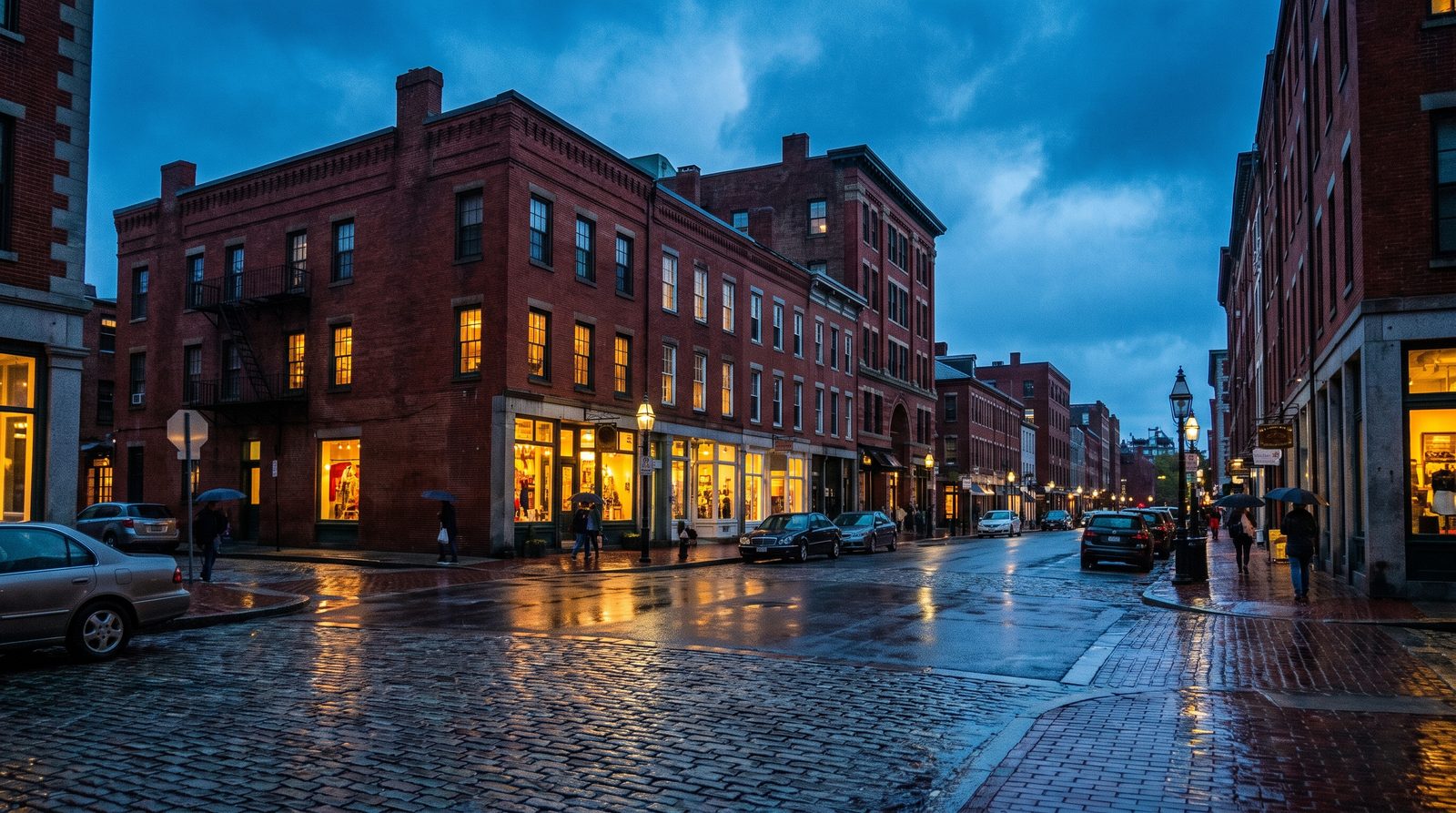
“People rarely search for a business in Lowell. They search for a service near a landmark, a street, or a neighbourhood.”
Which is why the geography below matters more than the city nameDowntown
The core along Merrimack, Central and Market Streets holds the courts, the professional offices, the restaurants and the cultural anchors: Lowell National Historical Park, the Lowell Memorial Auditorium, the Tsongas Center. Law practices, accountants, insurance brokers and design studios cluster here, partly because of the courthouse and partly because the restored mill buildings turned out to be good office space. Parking is structured rather than kerbside, which matters if your customers arrive by car with something heavy.
The Acre
Historically the first stop for arriving workers, and still one of the most linguistically mixed parts of the city. Independent grocers, bakeries, barbers, remittance and travel agents, and family restaurants operate here at a scale that rarely registers in national directories. If you are looking for a service in Khmer, Spanish, Portuguese or Arabic, this is often where it is.
Belvidere
The city’s most established residential district, east of the river. Demand here runs to the professional and domestic end: legal and financial advice, estate and trust work, home improvement, landscaping, and the household services that go with older, larger houses. Notary work in Belvidere skews heavily toward wills, trusts and property closings.
Pawtucketville and Centralville
North of the Merrimack. Pawtucketville carries much of UMass Lowell’s north campus and the student population that comes with it — food, printing, phone repair, cheap logistics, storage over the summer. Centralville is denser and more residential, with neighbourhood retail along Bridge Street and a strong small-contractor presence.
The Highlands
The largest neighbourhood by population, running southwest toward Chelmsford. A mix of housing stock and a long commercial spine, with automotive trades, medical offices, pharmacies and everyday retail. Its proximity to the Lowell Connector and Route 3 makes it convenient for businesses that need to move vehicles.
Back Central, South Lowell and Sacred Heart
South and east of downtown, closer to Tewksbury and Billerica. More industrial and light-manufacturing space here than elsewhere in the city, which is where a number of trade, storage and distribution operations sit.
Notary and signing services
Notary work is the single most common reason people arrive at this directory, and it is also where the most avoidable mistakes happen. A notary public verifies who signed a document. That is the whole job. A notary confirms the signer’s identity, confirms that the signature was made willingly, and records the act. A notary does not confirm that a document is true, legal, or a good idea.
What a Massachusetts notary can and cannot do
- Can take acknowledgements, administer oaths and affirmations, and witness signatures.
- Cannot give legal advice, draft documents, or tell you which form you need. If you need that, you need a lawyer.
- Cannot certify a copy of a vital record. Birth, death and marriage certificates have to come as certified copies from the issuing city or town clerk, or from the state Registry of Vital Records.
Massachusetts notaries are commissioned by the Governor. Rules on identification, journals and remote online notarisation have changed in recent years, so for current requirements check the Secretary of the Commonwealth rather than relying on any directory, including this one.
Mobile notaries and loan signing agents
A mobile notary travels to you: hospitals, rehabilitation and nursing facilities, offices, and homes where the signer cannot easily travel. A large share of notary demand in Lowell and Dracut comes from exactly these situations. A loan signing agent is a notary with additional training in mortgage document packages, who can walk a borrower through a closing set and get every signature and initial in the right place. The two overlap but are not the same, and a lender will often specify which it requires.
Multilingual notarisation
Given the city’s makeup, a notary who can explain the act in the signer’s own language is genuinely valuable. Note the distinction: a notary can explain the process in another language, but if the document itself needs to be in English for a US authority, or in another language for a foreign one, that is a translation job, not a notarial one.
Browse notary public listings.
Apostille and document authentication
If your document is going abroad, a notarised signature is usually only the first of two or three steps. An apostille is a certificate that makes a public document issued in one country acceptable in another without embassy involvement, under the Hague Convention of 1961.
Three authorities matter. Documents issued in Massachusetts go to the Secretary of the Commonwealth. Federal documents such as an FBI Identity History Summary go to the U.S. Department of State. Documents issued in another state go to that state. Sending a document to the wrong one is the most common and most expensive error in the process, and it is entirely avoidable.
Full guide
The routing rules, a decision chart, the document-by-document table and the four failures that cost people weeks are covered in depth in the Massachusetts apostille guide.
Browse apostille providers and certified translation services.
Shredding and records destruction
Document destruction is a compliance obligation in Massachusetts, not a housekeeping preference, and this is one of the few areas where the law is unusually specific.
What the law requires
- Massachusetts General Laws Chapter 93I requires that records containing personal information be destroyed so the information cannot practicably be read or reconstructed. For paper, that means redaction, burning, pulverising or shredding.
- 201 CMR 17.00, the Commonwealth’s standards for protecting personal information, requires organisations holding personal information about Massachusetts residents to maintain a written information security programme covering storage and disposal.
- The federal FACTA Disposal Rule applies to anyone who uses consumer report information.
- HIPAA governs protected health information for covered entities and their business associates.
“Personal information” here is broader than most people assume: a resident’s name combined with a Social Security number, a driver’s licence or state ID number, or a financial account or card number. A single spreadsheet printout can put a small business inside the rule.
On-site versus off-site destruction
On-site shredding destroys the material in a truck at your kerb, and you can watch it happen. Off-site collection takes sealed containers to a plant. Off-site is usually cheaper per pound; on-site gives you a chain of custody you personally observed, which is why it is common for legal, medical and financial records. If you take the off-site route, the container should be locked from the moment it leaves your control.
The certificate of destruction
Ask for one, keep it, and check that it names your organisation, the date, the volume and the method. In an audit or a breach investigation, the certificate is the evidence that you met your obligation. A vendor that will not issue one is not a vendor for regulated records.
Browse document shredding providers.
Shipping, mail and logistics
Lowell sits inside a well-served logistics corridor — I-495, Route 3 and the Lowell Connector — and the directory reflects a cluster of shipping, forwarding and mailbox businesses across the Merrimack Valley.
Carrier drop-off and pack-and-ship
Authorised drop-off points and independent pack-and-ship counters are not the same thing. A drop-off point accepts a package you have already prepared and labelled. A pack-and-ship counter will pack it, choose a carrier, compare rates, and handle the paperwork. For anything fragile, unusually shaped or heading overseas, the second is usually worth the surcharge.
International shipping paperwork
Most international shipping problems are documentation problems, not transport problems. A commercial invoice with an accurate description and declared value, the right commodity classification, and correct consignee details will clear customs; a vague description and a guessed value will not. “Gift” and “samples” are the two declarations most likely to invite an inspection.
Private mailboxes and virtual addresses
A private mailbox at a commercial mail receiving agency gives you a street address, which a PO box does not, and it can accept deliveries from carriers other than the Postal Service. Opening one requires USPS Form 1583 and two forms of identification, one photographic. Note the limits: a mailbox address is not automatically acceptable as a registered business address or for every official registration, so check before you rely on it.
See shipping services, international shipping and mail forwarding.

Professional services
The professional layer — legal, financial, marketing — is where the directory is growing and where local knowledge is worth the most.
Legal
Lowell’s courts draw a working legal community, and the practice areas that matter to most residents are property conveyancing, family law, immigration, personal injury and small-business formation. For anything involving a Massachusetts filing deadline, a locally practising lawyer beats a national referral service. See law offices.
Financial
Massachusetts has its own tax rules, and small business owners are best served by an accountant who deals with them daily rather than annually. The questions worth asking are about entity structure, sales tax obligations, and payroll if you are about to hire.
Marketing and web
For a business whose customers are within ten miles, local search — a properly filled-out business profile, consistent name, address and phone number across the web, and real reviews — will outperform broad advertising almost every time. A directory listing contributes to that consistency. See advertising and marketing.
How to choose a provider
Directory listings tell you a business exists and what it says it does. They do not tell you whether it is right for your job. This is the sequence worth running before you commit money.
A ten-minute check
- Confirm the licence or credential the work requires. Electricians, plumbers, contractors, notaries and insurance producers are all licensed in Massachusetts, and licences are verifiable through the relevant state board.
- Confirm insurance. For anyone working on your property or handling your records, ask for a certificate of insurance naming current coverage. Ask the insurer’s name, not just whether they “have insurance”.
- Get the price in writing, with the exclusions. The disputes are almost never about the quoted number; they are about what the quote did not include.
- Ask who actually does the work. Subcontracting is normal and fine, but you should know it is happening before it happens.
- Read the middling reviews. Five-star and one-star reviews tell you less than the three-star ones, which usually describe what really went wrong and how it was handled.
- Check the address is real. If a “local” provider’s address is a mailbox in another state and the work needs someone on site, that is worth knowing.
- Never pay the full amount up front for work not yet done, and be wary of pressure to pay by a method with no recourse.
For regulated document work — notarisation, authentication, records destruction — add one more: ask what happens if they get it wrong. A provider who has thought about that question will have an answer about re-doing the work or covering the government fee. A provider who has not will change the subject.
How listings are reviewed
Every submission is looked at by a person before it is published. Review means three things: confirming the business operates in or genuinely serves the Merrimack Valley, checking that the address and contact details are current and reachable, and placing the listing in categories that match its actual services rather than the categories that attract the most traffic.
What review is not: it is not an inspection, an endorsement, or a guarantee of quality. It does not verify licences, insurance or workmanship. A listing here means a real business with real contact details that plausibly serves this area. Everything in the checklist above is still your job.
Details go stale. If you find a listing with a dead number, a closed business or a wrong address, the contact form is the fastest way to get it corrected, and corrections are welcome from customers as well as owners.
Get your business listed
Listings start at $99 for twelve months, and the useful part is what you write rather than the fact of being listed. Full pricing and plan comparison are on the listing page.
- Describe the service, not the adjectives
“Mobile notary, evenings and weekends, hospitals and nursing homes across Greater Lowell” is findable. “Professional, reliable, trusted” is not. Write the sentence a customer would actually type.
- Use a real street address and a number a person answers
Consistency between your listing, your website and your other profiles is one of the signals local search actually uses. A mismatch across profiles quietly costs you visibility.
- Name your service area honestly
Tag the towns you will genuinely travel to. Over-tagging wastes everyone’s time, including yours, and produces calls you will turn down.
- Pick categories that match the work
Two accurate categories beat six aspirational ones. Listings are reviewed, and categories that do not match the described services get corrected.
- Keep it current
Hours, phone numbers and websites change. A stale listing costs you the call, and it is the one thing here entirely within your control.
Opening or moving a business into Lowell
Most people arrive at a directory looking for a supplier. A steady minority arrive because they are thinking about opening something here, and the practical questions are consistent enough to be worth answering directly.
The permissions are municipal, not just state-level
Registering a business entity with the Commonwealth is only the first layer. Trading in Lowell also involves the city: a business certificate for anyone operating under a name that is not their own legal name, zoning confirmation that your use is permitted at that address, and for anything involving food, alcohol, signage, public assembly or building alterations, a separate approval on its own timetable. The Board of Health, the fire department and the building department each have their own processes. Start with the City of Lowell before you sign a lease, not after.
Mill space is not ordinary commercial space
A great deal of Lowell’s available square footage sits inside converted nineteenth-century mill buildings, and that carries real advantages and real constraints. The advantages are the ones you can see: large floor plates, tall windows, genuine character, and rents that compare well with anything closer to Boston. The constraints are less visible — freight access and loading, lift capacity, floor loading limits, heating costs across a New England winter, and the fact that alterations to a historic structure can involve review that a modern industrial unit would not. Ask about all of them during the viewing.
Getting found once you open
The first ninety days matter more than most owners expect. Claim and complete your business profile on the major map services, publish the same name, address and phone number everywhere it appears, describe what you actually do in the words customers use rather than industry language, and start asking satisfied customers for reviews immediately rather than eventually. Listing in this directory contributes to that consistency, but it is one signal among several, not a substitute for the rest.
Where to check first
For licensing, zoning and permitting, the City of Lowell is the authoritative source and requirements change. For networking and referrals, the Greater Lowell Chamber of Commerce is the established route. Nothing in this guide replaces either.
Questions people ask
How much does a listing cost?
Listings are paid and run for twelve months. A single entry is $99, up to three with featured placement and reviews is $199, and up to five is $249. You are billed once at checkout and nothing renews automatically. Full comparison is on the listing page.
Do I have to be located in Lowell?
No, but you do have to serve the area. The directory covers Lowell and the surrounding Merrimack Valley, including Dracut, Tewksbury, Andover and nearby towns, along with parts of southern New Hampshire. A business in Boston or Nashua that regularly serves Lowell customers belongs here; a business with no connection to the area does not.
Why does one business appear in several categories?
Because many genuinely do several things. A shipping centre that also notarises documents and shreds paper is three services under one roof, and hiding two of them would make the directory less useful. Categories are assigned to match real services, which is why the category totals add up to more than the number of listings.
Is a listing here an endorsement?
No. Listings are checked for whether the business is real, reachable and correctly categorised. They are not checked for licensing, insurance, pricing or quality of work. Run your own checks before you hire anyone.
My document is going overseas. Do I need a notary or an apostille?
Usually both, in that order, and sometimes a translation as well. A notary witnesses your signature; the apostille authenticates the notary so a foreign authority will accept it. Documents already issued by a government body, such as a certified birth certificate, skip the notary and go straight to authentication. Federal documents such as an FBI Identity History Summary are authenticated by the US Department of State rather than by Massachusetts.
Am I legally required to shred business records?
If your records contain personal information about Massachusetts residents, yes. Chapter 93I requires destruction such that the information cannot practicably be read or reconstructed, and 201 CMR 17.00 requires a written information security programme covering disposal. Federal rules add obligations for consumer report data and health information. The size of your business does not exempt you.
How do I get my business to rank locally?
Consistency and specificity. Use the same business name, address and phone number everywhere it appears, describe the actual services in the words customers use, name the neighbourhoods and towns you genuinely serve, and collect real reviews. A directory listing contributes to that consistency; it does not replace the rest of it.
A listing has the wrong details. How do I fix it?
Use the contact form. Say which listing and what is wrong. Corrections from customers are as welcome as corrections from owners, and a dead phone number is worth reporting even if the business is not yours.
Something missing?
This directory is openly incomplete in several categories. If you run a trade, a shop, a restaurant or a service in Greater Lowell and you are not here, that is a gap worth closing. Add your business or tell us what we are missing.